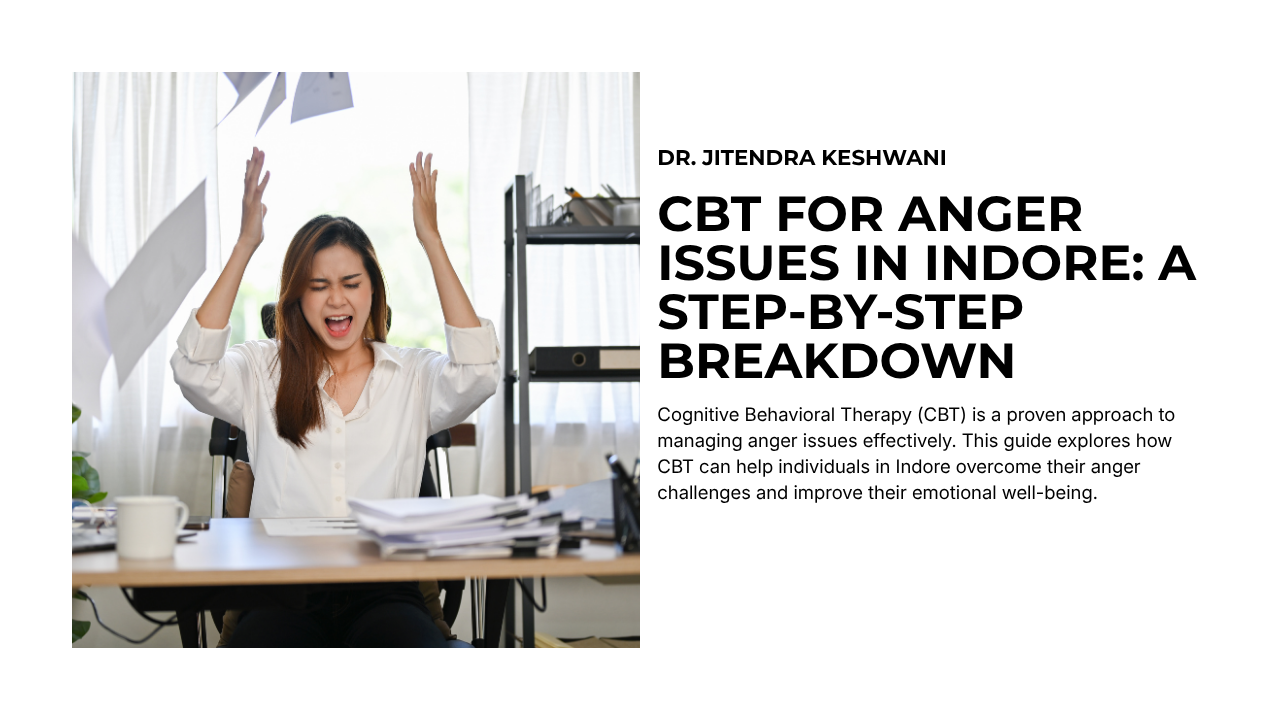
Understanding Anger Issues
Anger is a natural emotion that everyone experiences, but when it becomes overwhelming or destructive, it can lead to serious challenges in personal and professional relationships. Many individuals in Indore struggle with anger issues, impacting their quality of life.
What is Cognitive Behavioral Therapy (CBT)?
Cognitive Behavioral Therapy is a structured, time-limited therapy that focuses on the connection between thoughts, emotions, and behaviors. It is effective in addressing various mental health issues, including anger management. CBT helps individuals recognize their anger triggers and teaches them coping strategies to manage their responses better.
Benefits of CBT for Anger Management
- Improved Self-Awareness: CBT encourages individuals to identify their anger triggers and recognize their emotional responses.
- Effective Coping Strategies: Clients learn practical techniques to manage anger, such as relaxation exercises, problem-solving skills, and communication techniques.
- Enhanced Emotional Regulation: CBT provides tools to help individuals regulate their emotions, leading to healthier responses to anger.
- Long-Term Change: By addressing the root causes of anger, CBT promotes lasting behavioral change and emotional well-being.
Step-by-Step Breakdown of CBT for Anger Issues
Step 1: Assessment and Goal Setting
In the initial sessions, a qualified therapist at Dr. Keshwani's Mind Care Clinic will assess the individual's anger issues and set specific, achievable goals for therapy.
Step 2: Identifying Triggers
Clients will learn to identify situations, thoughts, and feelings that trigger their anger. Keeping an anger diary can help in tracking these triggers effectively.
Step 3: Understanding Thought Patterns
Therapists guide clients to explore their automatic thoughts associated with anger. Recognizing negative thought patterns is crucial for changing responses.
Step 4: Skill Development
CBT focuses on teaching specific skills to manage anger, such as:
- Relaxation Techniques: Deep breathing, progressive muscle relaxation, and mindfulness.
- Communication Skills: Learning to express feelings calmly and assertively without aggression.
- Problem-Solving: Developing effective solutions to conflicts instead of reacting with anger.
Step 5: Behavioral Experiments
Clients practice new behaviors in real-life situations, allowing them to apply what they've learned and assess the outcomes.
Step 6: Monitoring Progress
Ongoing assessment of progress helps clients recognize improvements and adjust goals as necessary. Regularly reviewing the anger diary can highlight positive changes.
Step 7: Maintenance and Relapse Prevention
In the final stages of therapy, clients work on maintaining their progress and developing strategies to prevent relapse. This can involve periodic check-ins with the therapist.
Finding Help in Indore
If you or someone you know is struggling with anger issues, consider reaching out to Dr. Keshwani's Mind Care Clinic. With over 14 years of experience, Dr. Jitendra Keshwani provides evidence-based therapy tailored to individual needs.
Located at G-10, Bansiwala Tower, Agrasen Square, Sapna Sangeeta Road, Indore, the clinic offers both in-clinic and online consultations for flexibility and convenience. You can contact them at +91 7880067789 or +91 9039602848 for more information.
Conclusion
Cognitive Behavioral Therapy is a powerful tool for managing anger issues. By understanding and changing thought patterns, individuals can regain control of their emotions and improve their relationships. If you're in Indore and looking for professional help, Dr. Keshwani's Mind Care Clinic is here to support you on your journey to better mental health.