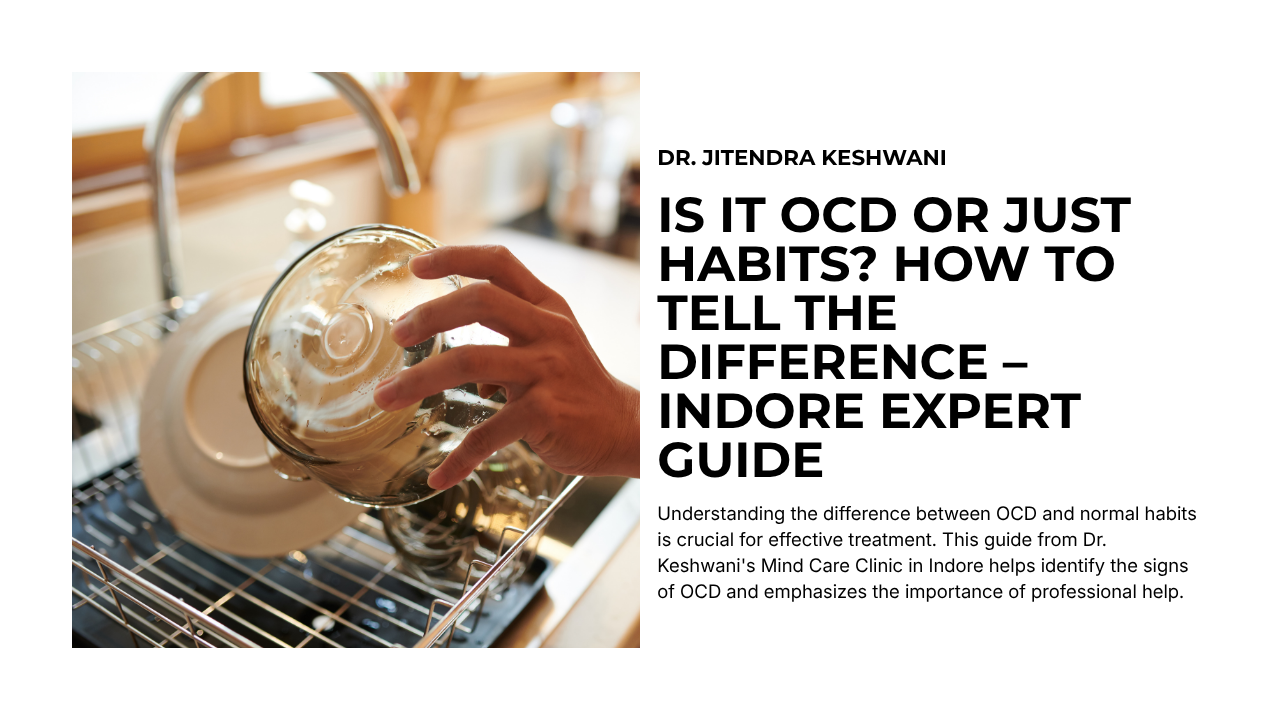
Introduction
Obsessive-Compulsive Disorder (OCD) is often misunderstood and confused with simple habits. It is crucial for individuals and families to differentiate between the two as this distinction can significantly affect treatment options and quality of life.
In this guide, we will explore the characteristics of OCD versus habits, the importance of seeking professional help, and how Dr. Keshwani's Mind Care Clinic in Indore can assist those in need.
Understanding OCD
OCD is a mental health disorder characterized by persistent, unwanted thoughts (obsessions) and repetitive behaviors (compulsions) that an individual feels driven to perform. These obsessions and compulsions can interfere with daily functioning and cause significant distress.
Common Symptoms of OCD
- Obsessive thoughts: Constant worry about contamination, harm to oneself or others, or the need for order and symmetry.
- Compulsive behaviors: Repeated handwashing, checking locks, counting, or organizing items in a specific way.
- Time-consuming rituals: Engaging in compulsive behaviors that take up more than an hour each day.
- Distress and anxiety: Feeling anxious when unable to perform compulsive behaviors.
Identifying Habits
Habits, on the other hand, are often automatic behaviors that we develop over time. They can be beneficial or neutral, and they do not typically cause significant distress or interfere with daily activities.
Characteristics of Habits
- Routine behavior: Engaging in a task or activity regularly, such as brushing teeth or exercising.
- Less intrusive: Habits do not usually lead to distress or anxiety if not performed.
- Adaptability: Most habits can be modified or changed without significant emotional fallout.
- No compulsive drive: Unlike OCD, habits do not involve a sense of urgency or compulsion.
How to Differentiate Between OCD and Habits
Identifying whether your symptoms are related to OCD or just habits can be challenging. Here are some key points to consider:
- Intensity: If the behavior is excessive and causes distress, it may indicate OCD.
- Control: Individuals with OCD often feel they cannot control their thoughts or behaviors.
- Impact on daily life: If the behaviors significantly disrupt your daily routine, it’s a sign to seek help.
- Triggers: OCD is often triggered by specific thoughts or situations that provoke anxiety.
The Importance of Seeking Professional Help
If you suspect that you or a loved one may be experiencing OCD, it is crucial to seek professional help. At Dr. Keshwani's Mind Care Clinic, we offer a compassionate and evidence-based approach to mental health care.
Dr. Jitendra Keshwani, a qualified neuro-psychiatrist with over 14 years of experience, specializes in treating OCD through therapies such as Exposure and Response Prevention (ERP) and Cognitive Behavioral Therapy (CBT).
How Dr. Keshwani's Mind Care Clinic Can Help
We provide a range of services tailored to meet the needs of our patients, including:
- Comprehensive neuro-psychiatric evaluations to diagnose OCD and differentiate it from habits.
- Personalized treatment plans that may include therapy, medication, and support.
- Online consultations for those unable to visit our clinic in Indore.
- Outreach camps across Madhya Pradesh to ensure access to mental health care.
Our goal is to empower individuals with the tools and strategies they need to manage their symptoms effectively.
Conclusion
Understanding whether you are dealing with OCD or just habits is essential for effective treatment. At Dr. Keshwani's Mind Care Clinic, we are dedicated to providing the highest quality psychiatric care to help you achieve mental wellness. If you have any concerns about your mental health, do not hesitate to reach out for support.
For more information, or to schedule an appointment, contact us at +91 7880067789 or keshwanijitendra28@gmail.com.